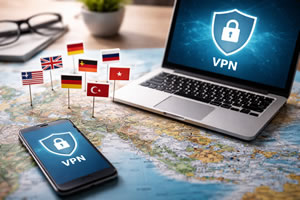
At some point, almost every internet user runs into invisible walls. A streaming service says “This content isn’t available in your region.” A website behaves differently depending on where you’re connecting from. Public Wi-Fi feels convenient—but also unsettling.This is where a quiet but powerful piece of infrastructure comes into play: the proxy server.
Proxies are often mentioned in the same breath as VPNs, yet they serve a different purpose. Used correctly, they are precise, efficient tools. Used carelessly, they can expose your data in ways you didn’t intend. Let’s separate signal from noise.
What Is a Proxy?
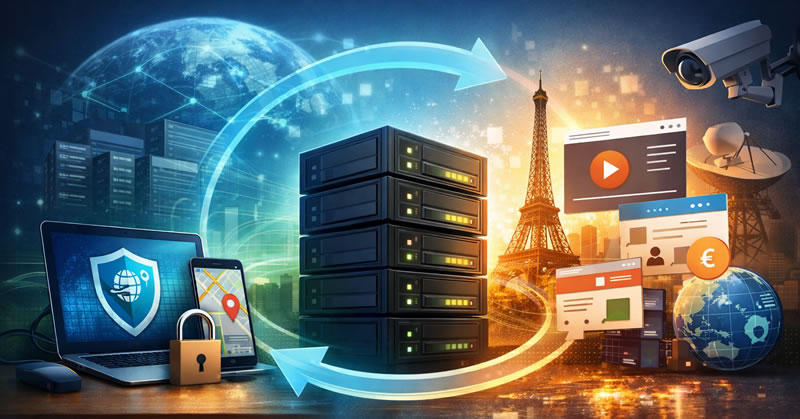
A proxy server acts as an intermediary between your device and the internet.
Normally, when you visit a website, your device connects directly to the server hosting that site. When you use a proxy, your request is routed through a third-party server first.
In practice:
You → Proxy Server → Website
Website → Proxy Server → You
The website sees the proxy’s IP address, not yours.
Think of a proxy as a courier. The destination receives the package, but it only recognizes the courier—not the sender.
How Does a Proxy Work?
Once configured (in your browser, application, or operating system), a proxy intercepts outgoing requests and forwards them on your behalf. Depending on the setup, it may:
Mask your IP address
Apply filtering rules
Cache responses to improve performance
All of this happens in milliseconds. To the user, it often feels seamless. The impact, however, is tangible: altered geographic presence, controlled access, and sometimes improved efficiency.
Common Proxy Use Cases (Western Context)
1. Bypassing Geo-Restrictions on Streaming Platforms
For instance, if you’re a U.S. resident traveling abroad and want to access your Hulu or US Netflix library, a proxy can route your traffic through a U.S.-based IP address.
Similarly, UK residents use proxies to access BBC iPlayer when outside the country.
It’s important to note: while technically feasible, this may violate the platform’s Terms of Service—even if it’s not illegal.
2. Privacy on Public Wi-Fi
Public Wi-Fi networks—airports, cafés, hotels—are convenient but inherently risky. While a proxy doesn’t encrypt all traffic by default, HTTPS proxies add a layer of protection by encrypting the data exchanged with websites.
For privacy-conscious users, this often serves as a lightweight alternative when a full VPN isn’t required.
3. Web Scraping, Market Research, and SEO Analysis
Many businesses and developers rely on proxies for:
- Price comparison across regions
- SEO rank tracking without personalization bias
- Market research and competitive intelligence
Rotating residential or datacenter proxies help avoid IP-based rate limits and detection mechanisms.
This is a legitimate and widely accepted enterprise use case.
4. Corporate and Enterprise Environments
In corporate networks, proxies are less about anonymity and more about control and performance.
Many businesses use reverse proxies to:
- Distribute server load
- Improve website performance
- Add an extra security layer between users and backend systems
Forward proxies, on the other hand, are used for:
- Content filtering
- Bandwidth management
- Enforcing corporate internet policies
5. Torrenting and P2P (Legal Use Cases)
In jurisdictions where torrenting is legal for open-source software or licensed content, proxies—particularly SOCKS5 proxies—are sometimes used to mask IP addresses in P2P applications.
That said, proxies do not provide the same level of protection as VPNs in this context, especially without encryption.
Types of Proxies: Not All Proxies Are the Same
HTTP Proxies
Designed specifically for web traffic. Lightweight and easy to configure, but often lack encryption.
Best for basic IP masking and web-based tasks.
HTTPS Proxies
An improved version of HTTP proxies that encrypt traffic between your browser and the proxy server.
Essential when logging into accounts or transmitting sensitive data.
SOCKS Proxies (SOCKS4 / SOCKS5)
More flexible and protocol-agnostic. SOCKS5 supports authentication and is widely used by developers, torrent clients, and custom applications.
Ideal for advanced use cases.
Datacenter Proxies
Fast and affordable, hosted in data centers. Easily detected and blocked by many websites.
Common in automation and large-scale data collection.
Residential Proxies
Use IP addresses assigned to real household connections. More expensive, but far less likely to be flagged.
Preferred for e-commerce monitoring and ad verification.
Mobile Proxies
Route traffic through mobile carrier networks (4G/5G). Extremely hard to detect, often used in social media automation and mobile app testing.
Risks and Limitations of Proxy Usage
Free Proxies: The Hidden Cost
Free proxies are widely available—and widely abused.
Many free proxy servers:
- Log your traffic
- Inject ads or malicious scripts
- Sell browsing data to third parties
In an era shaped by concerns over Big Tech surveillance and data harvesting, using an unverified free proxy is often counterproductive.
Performance and Reliability Issues
Proxies can introduce latency, especially when overloaded or geographically distant. Shared proxies are notorious for sudden slowdowns and connection drops.
DNS Leak Risks
If DNS requests bypass the proxy, your real location may still be exposed. This undermines the very purpose of using a proxy.
Proper DNS configuration is essential.
Application Compatibility
Not all applications respect system proxy settings. Some mobile apps and desktop software require VPN-level routing to function correctly.
Proxy vs VPN: A Technical Distinction
Proxies and VPNs overlap in purpose but differ fundamentally in scope.
A proxy reroutes specific traffic and usually does not encrypt data by default. It’s precise and resource-efficient.
A VPN encrypts all traffic from your device and routes it through a secure tunnel. This provides comprehensive privacy and protection, particularly on untrusted networks.
In practical terms:
- Targeted tasks, testing, scraping → Proxy
- Broad privacy, security, public Wi-Fi → VPN
They are complementary tools, not interchangeable ones.
Legal and Regulatory Considerations
In most Western countries, using a proxy is legal. What matters is how it’s used.
Data protection frameworks such as GDPR (EU) and CCPA (California) emphasize transparency and lawful data processing. Businesses using proxies must ensure compliance, especially when handling personal data.
The technology itself is neutral. Responsibility lies with the user.
Final Thoughts: A Tool, Not a Shield
Proxies are powerful instruments when used with intention and understanding. They enable flexibility, scalability, and control—but they are not a silver bullet for privacy.
In a digital landscape shaped by surveillance concerns, regulatory frameworks, and growing data awareness, informed choices matter more than ever.
Knowing when to use a proxy—and when not to—is the difference between convenience and compromise.

Pupuler Post